


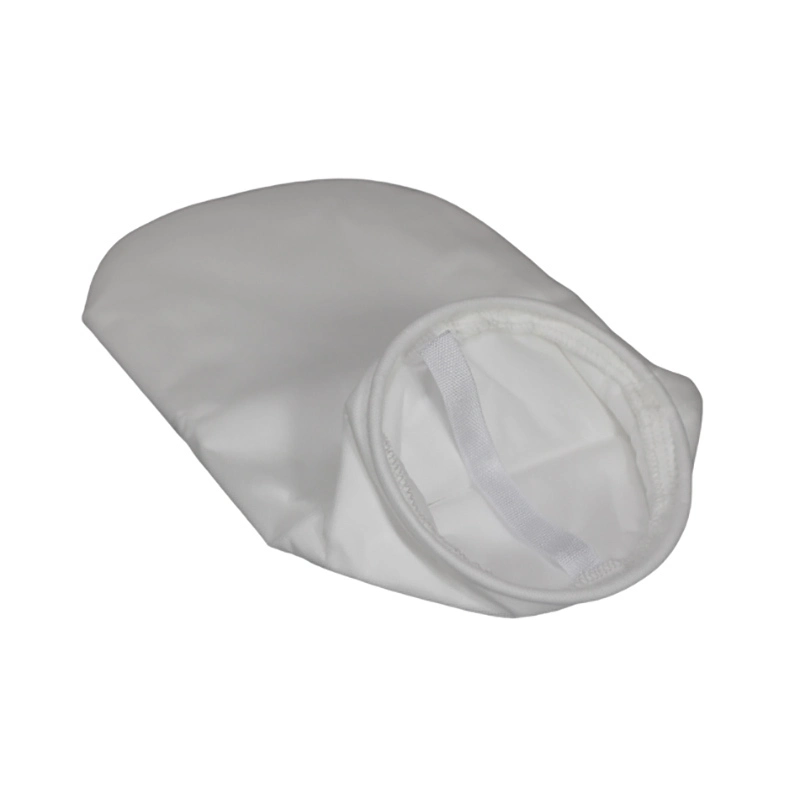
AGF Oil-Absorbing Filter Bag for Liquid Filtration
AGF oil-absorbing filter bags are intended for liquid processes containing trace oil and particles. Review oil type and concentration, liquid chemistry, flow and housing dimensions before selection. The listed oil-absorption value of 20 times the media weight requires confirmation of the supplied material and test conditions; actual capacity and replacement intervals depend on the application.
Product Introduction
Melt-blown polypropylene oil-absorbing media is intended for trace non-emulsified hydrocarbons in liquids. The listed absorption values of 15–20 times its own weight for oil and less than 0.1 times for water require confirmation of test conditions and supplied media. Review chemical compatibility, mechanical requirements, oil concentration and particle loading for the application; actual removal performance must be validated.
Oil absorbing AGF filter bag
|
Product Item |
Three Layers Melt-blown Nonwoven PP Oil absorbing AGF filter bag/Degreasing filter sock |
|
Filter Media |
Polypropylene oil absorbent cotton + polyester, nylon (MO) / polyester (PE), nylon (MO) / polypropylene (PO) |
|
Maximum Operating Temperature |
Polyester: 275-325° F (135-162° C) |
|
Relative filtration accuracy |
0.5, 1, 3, 5, 10, 25, 50, 75, 100, 125, 150, 200, 250, 300 |
|
Filter Bag Area(m²) / |
1#: 0.19 m² / 7.9 Liter |
|
Collar Ring |
Polypropylene ring |
|
Shape |
Round, V type, sector, square |
Oil absorbing AGF filter bag
|
Size |
Maxflow |
Filter Area |
Volume |
Diameter |
Length |
|
(m³/h) |
(㎡) |
(L) |
(Inch) |
(Inch) |
|
|
#01 |
20 |
0.25 |
8.00 |
7 |
17 |
|
#02 |
40 |
0.50 |
17.00 |
7 |
32 |
|
#03 |
6 |
0.09 |
1.30 |
4 |
9 |
|
#04 |
12 |
0.16 |
2.50 |
4 |
15 |
|
#05 |
18 |
0.20 |
3.80 |
6 |
22 |
|
Customized size, shape and structure |
|||||
Application
Potential applications include parts-cleaning liquids, coatings, hydraulic oils, lubricants, process water and wastewater pretreatment, subject to media compatibility and process review. For beer, wine, spirits, vinegar or other food and beverage uses, obtain documentation for the supplied materials and intended food-contact conditions. Any efficiency requirement above 99% needs an agreed particle size, test method and operating conditions; it is not a universal performance guarantee.