


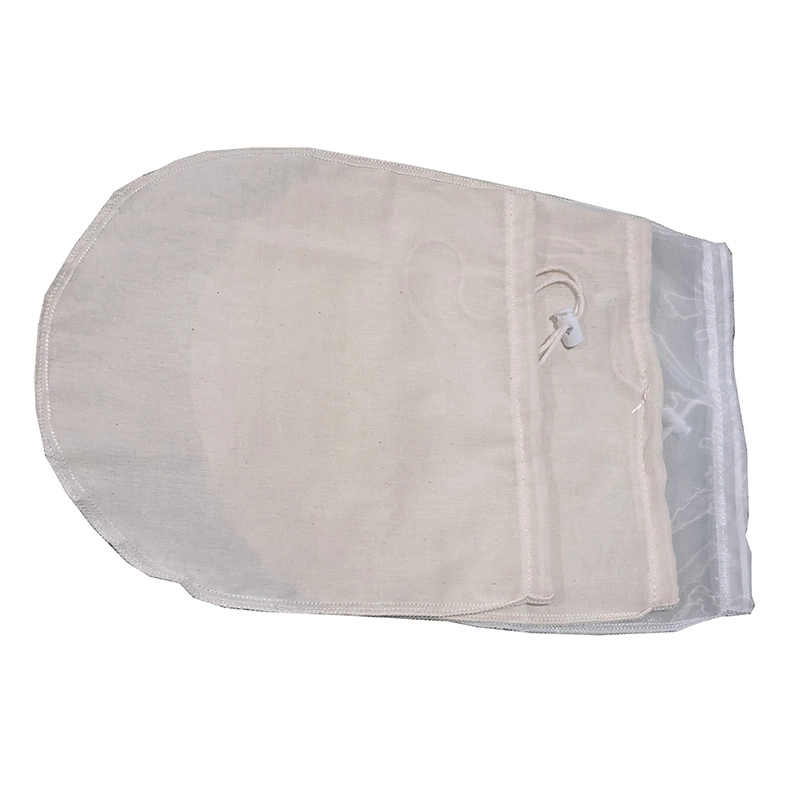
Liquid Filter Bag for Food and Beverage Processing
Liquid filter bags for milk, beverage and food-processing applications are configured around the liquid and filtration objective. Selection depends on material compatibility, micron rating, bag dimensions, ring or seal design, operating temperature, flow conditions, cleaning method and applicable food-contact requirements. Confirm these details before quotation.
Product Introduction
Milk filter bags usually use food grade fiber materials, such as nylon, polyester, polypropylene, etc. These materials have good corrosion resistance, high temperature resistance, acid and alkaline resistance, and can meet the requirements of milk filtration. In addition, milk filtration bags can also adopt different weaving methods and pore sizes to adapt to different types of milk filtration needs.
Product parameters
|
Size |
Maxflow |
Filter Area |
Volume |
Diameter |
Length |
|
(m³/h) |
(㎡) |
(L) |
(Inch) |
(Inch) |
|
|
#01 |
20 |
0.25 |
8.00 |
7 |
17 |
|
#02 |
40 |
0.50 |
17.00 |
7 |
32 |
|
#03 |
6 |
0.09 |
1.30 |
4 |
9 |
|
#04 |
12 |
0.16 |
2.50 |
4 |
15 |
|
#05 |
18 |
0.20 |
3.80 |
6 |
22 |
|
Customized size, shape and structure |
|||||
Application
In addition to being used for milk filtration, the milk filter bag can also be used in other food processing fields, such as filtration of soybean milk, yogurt, juice, etc. At the same time, milk filter bags are also widely used for solid-liquid separation in fields such as laboratories, pharmaceuticals, and chemical engineering.