


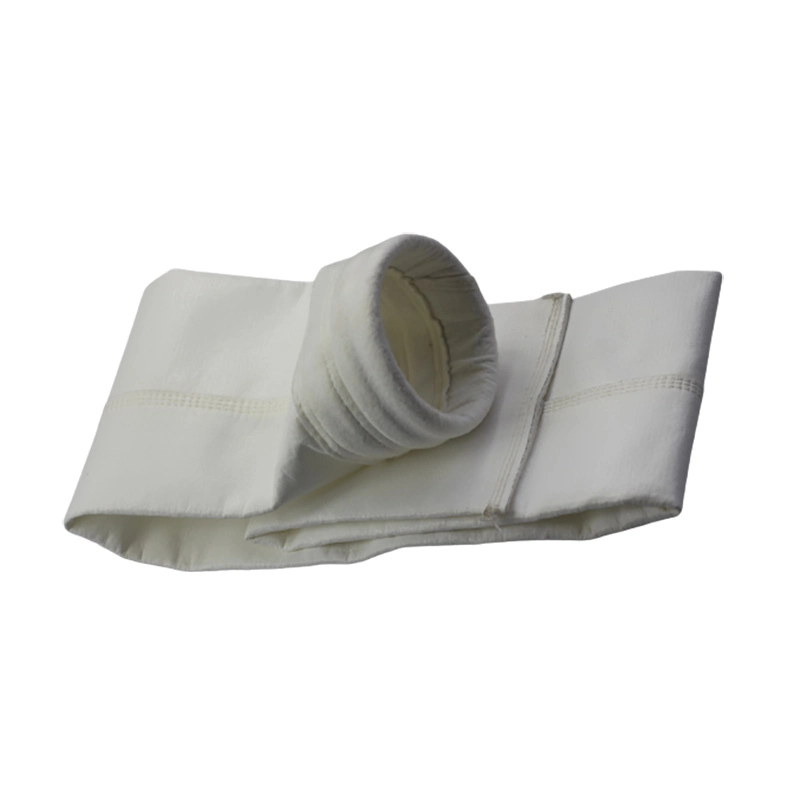
PP Needle-Felt Filter Bag for Dust Collection
Polypropylene needle-felt filter bags for dust collection. Surface treatments may include singeing, heat setting, calendering or hydrophobic treatment, depending on the supplied specification. Confirm the required dimensions, finish and operating conditions before quotation.
For food or flour applications, review documentation for the supplied materials and the requirements of the complete dust-collection system before ordering.
PP Needle-Felt Filter Bags
Polypropylene needle-felt filter bags are selected according to the dust, gas chemistry, temperature, cleaning method and baghouse design. Confirm the required finish and construction before quotation. For food or flour applications, verify the supplied-material documentation and system requirements. Any antistatic requirement must be reviewed for the complete installation; the bag alone does not establish system safety.
Two factors effect the choice of filter bags
Dust Separation Procedure
Different dust separation procedures require different weights and air permeability values for filter media.
Selection considerations:
- Match media weight and permeability to the cleaning method and dust characteristics.
- Review emission requirements together with media construction and the complete filtration system.
Review fan energy, compressed-air use and maintenance requirements for the actual installation; savings cannot be assumed from media weight alone.
|
Dust Separation Procedure |
(g/m2) |
Air Permeability |
|
|
mm/s @200Pa |
l/(dm²min) @200Pa |
||
|
Intermittent Shaking |
300-350 |
667-1000 |
400-600 |
|
Shaking- and reverse air |
350-450 |
417-667 |
250-400 |
|
Low pressure cleaning |
400-500 |
250-583 |
150-35 |
|
Pulse Jet |
500-650 |
83-250 |
90-150 |
Filter bags material character
|
Resistance of synthetic fiber to the influence of chemicals and to temperatures |
|||||||||
|
Filter type |
Continuous temperature |
Peak temperature |
Resistance to hydrolysis |
Resistance to acids |
Resiatance to alkalis |
Resistance to oxidation |
Ph value |
Application |
Remark |
|
Pp |
90℃ |
95℃ |
Excellent |
Excellent |
Excellent |
Restricted |
1-14 |
Applicable to food, flour, sugar, fertilizer, electroplating and pesticide industries |
Restricted resistance to oxidation, but excellent resistance to hydrolysis |
|
Co-acrylic |
115℃ |
120℃ |
Good |
Moderate |
Moderate |
Good |
6-13 |
Applicable to dergent industry and coal powder collection |
Good resistance to hydrolysis |
|
Co-acrylic |
125℃ |
140℃ |
Good |
Good |
Moderate |
Good |
3-11 |
Applicable to detergent, waste incineration, asphalt, spray dryer, coal mill and power plant industries |
Good resistance to hydrolysis |
|
Polyester |
150℃ |
150℃ |
Restricted |
Moderate |
Restricted |
Good |
4-12 |
Applicable to mine, limestone, cement, iron and steel induestries,alumina delivery, electrolytic aluminium, non-ferrous metal production, wood processing, food processing and pharmacy industry. |
Good resistacne to oxidation, while limited resistance to acids and alkalis. Serive life will be affected by water content under high temperature |
|
Pps |
190℃ |
200℃ |
Excellent |
Excellent |
Excellent |
Moderate |
1-14 |
Applicable to the working conditions with low oxidation gas from coal-fired boiler, waste incineration, metal smelting and chemical industries |
Moderate resistance to oxidation, but excellebnt resistance to acids and alkalis. |
|
M-aramide |
200℃ |
220℃ |
Moderate |
Moderate |
Moderate |
Moderate |
5-9 |
Licable tp asphalt, non-ferrous metal production, ceramic, glass industries, kilin in cement factories and blast furnace in steel factory |
Moderate resistance to oxidation. Characteristics will be influenced by water content under high temperature. |
|
Polyimide |
240℃ |
260℃ |
Good |
Moderate |
Moderate |
Good |
3-13 |
Applicable to the working condition with corrosive gas, such as chemical, metal smelting, waste incineration industries, cement kiln and coal-fired boiler |
Excellent resistance to high peak temperature |
|
Ptee |
250℃ |
280℃ |
Excellent |
Excellent |
Excellent |
Excellent |
1-14 |
Applicable to the working condition with high corrosive gas and high temperature, such as chemical industry, coal-fired boiler, waste incineration industry and non-ferrous metal production |
Excellent resistance to all chemical influences. |
Specification
|
Construction |
Needle punch felt |
|
Fiber Composition |
100% PP |
|
Scrim Composition |
100%PP |
|
Felt Area Weight |
450g/m2 |
|
Thickness |
1.7mm |
|
Density |
0.26g/cm3 |
|
Mean Air Permeability |
140L/dm2.min |
|
Breaking Strength-MD(warp) |
≥1200 N/5cm |
|
Breaking Strength-CMD(weft) |
≥1200 N/5cm |
|
Breaking Elongation(200 N/5cm)-MD(warp) |
<5% |
|
Breaking Elongation( 200N/5cm)-CMD(weft) |
<5% |
|
Dry Shrinkage (150℃, 90min) |
1% |
|
Blasting strength |
>300 N/cm2 |
|
Operating Temperatures |
<90℃ |
|
Continuous |
90℃ |
|
Recommended Maximum Surge |
100℃ |
|
Finish |
Heat set, singed, calendared W/O Repellent |
|
Diameter (mm) |
Length (mm) |
Weight (g/㎡) |
|
120, 130, 133, 155, 180, 200, 250, 292, 300 |
1000, 1500, 2000, 2400, 25000, 2480, 2800, 3000, 3200, 3600, 4000, 4400, 5000, 6000, 8000 |
300, 350, 400, 450, 500, 550, 600 |
|
Most commonly used dimensions |
133mm*1500mm, 133mm*2000mm, 133mm*2500mm |
|
|
Most commonly used weight |
400g, 450g, 500g |
|
|
We can customize diameter, length, and weight for you |
||
Application
Polypropylene needle felt may also be considered for liquid-solid separation, but a dust-collection bag should not be assumed interchangeable with a liquid-filter bag. Confirm the equipment, bag construction, liquid compatibility and operating limits for the intended application.
For food, pharmaceutical or other regulated processes, request documentation specific to the supplied materials and intended use before ordering.